
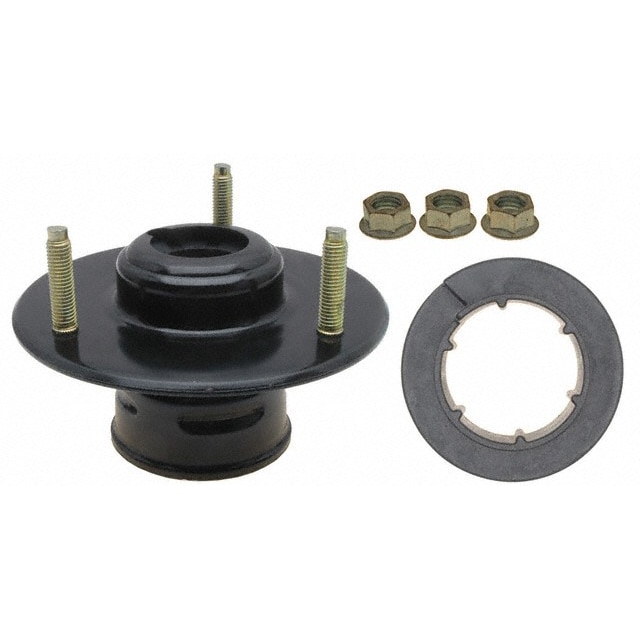
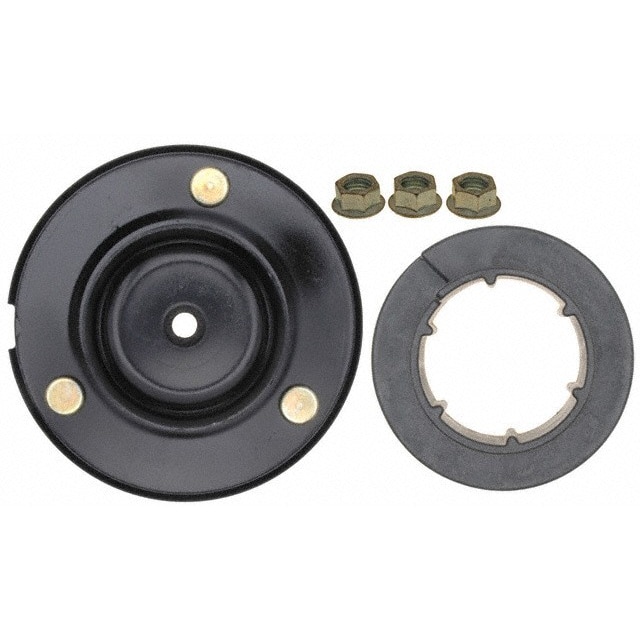
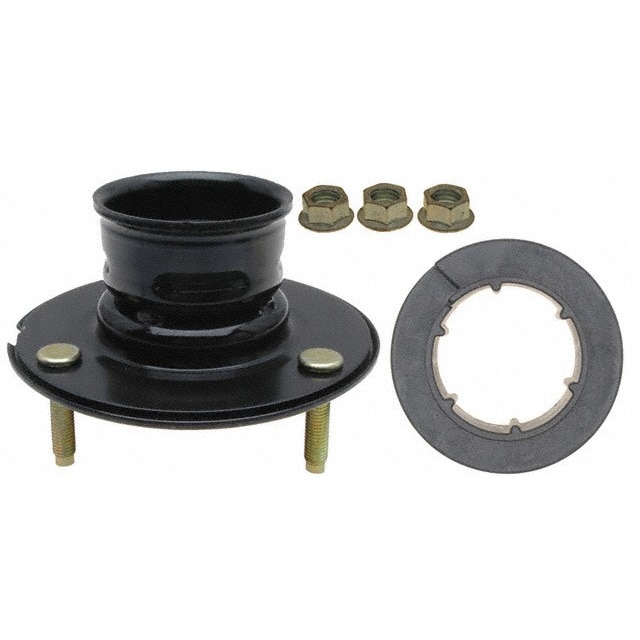
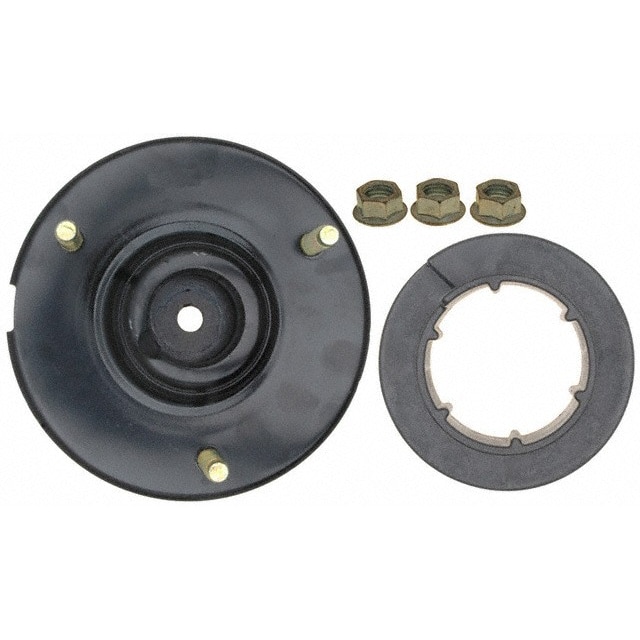
 WARNING: Cancer and Reproductive Harm - www.P65Warnings.ca.gov
If you have determined your strut to be worn out and in need of replacement, then it is very possible your suspension strut mount will need to be replaced as well. While replacing the strut or strut mount, it is a good idea to also inspect all suspension components to ensure that all damaged or worn parts are replaced. To inspect your suspension components to gauge wear, check for:
- Leaking oil or wetness along the body of the shock or strut.
- Broken mounts and worn or missing bushings.
- Broken, damaged, or missing mounting hardware.
- Severely dented reservoir tube and bent or scratched piston rod.
- Cupped tire wear.
- Damaged strut body springs, seats, and bushings.
- Defective strut bearing or missing plate.
Visual indications of a worn suspension strut mount include:
- Clunking noises when driving under normal conditions.
- Steering stiffness.
- Poor steering response.
- Roll or sway in turns.
- Vehicles bounces or slides sideways on a winding rough road.
- Abnormal rear end 'squat' when accelerating.
- Abnormal front end nose dive when braking.
- Poor alignment.
- Cracked and/or sagging rubber.
- Corrosion.
- Deformed or bent parts.
- Loss of grease from sealed bearing assembly.
- Signs of wear due to rubbing.